

What to Say When Your Child Is Having a Really Bad Day
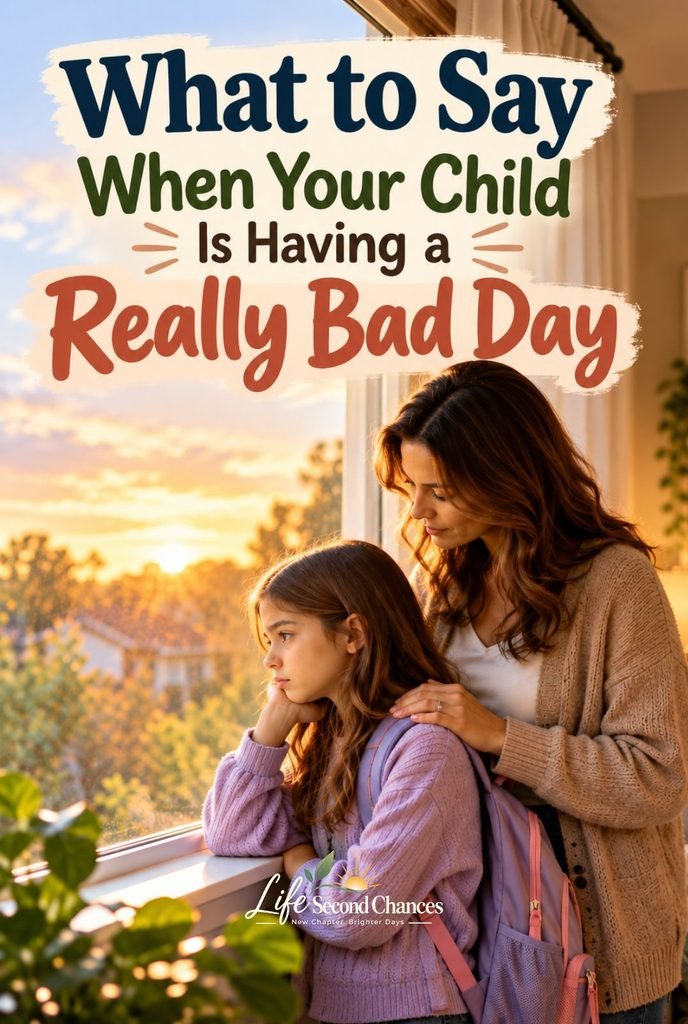
Some days, your child walks through the door and you know immediately.
Something happened.
Maybe the backpack hits the floor harder than usual.
Maybe they’re unusually quiet.
Maybe they snap at their sibling over something tiny.
Maybe they head straight to their room.
Or maybe the story comes pouring out before they’ve even taken off their shoes.
They failed a test.
Their best friend ignored them.
Someone laughed at them.
They weren’t invited.
They made a mistake in front of everyone.
They lost something important.
They had an argument.
They tried their hardest and it still didn’t work.
And because you love them, your first instinct is often:
Fix it.
Make the sadness disappear.
Explain why it isn’t so bad.
Tell them exactly what to do tomorrow.
Call someone.
Solve the problem.
But sometimes the first thing a child needs isn’t a solution.
They need somewhere safe to have a bad day.
And the words we use in those moments can help them feel understood before we start figuring out what comes next.
Before You Say Anything, Listen
You don’t need the perfect parenting sentence immediately.
Sometimes your child needs a few minutes to talk.
Let them tell the story badly.
Let them jump around.
Let them repeat themselves.
Let them be dramatic.
Let them say:
“It was the worst day EVER.”
You may know they’ll probably feel differently tomorrow.
But right now, they’re telling you how today feels.
Try not to interrupt every thirty seconds with advice.
Listen long enough to understand what actually happened.
Then you can decide what they need from you.
1. “That Sounds Really Hard.”
Simple.
No lecture.
No solution.
No attempt to convince them they shouldn’t feel the way they feel.
Just:
“That sounds really hard.”
This communicates:
I hear you.
Maybe your child’s problem seems small from an adult perspective.
They weren’t invited to a birthday party.
Their friend sat with someone else.
They got something wrong in class.
But childhood problems happen inside a child’s world.
You don’t have to agree that something is a catastrophe to acknowledge that it hurt.
2. “I’m Glad You Told Me.”
Children don’t always tell parents when something is wrong.
Sometimes they’re embarrassed.
Sometimes they’re afraid you’ll get angry.
Sometimes they worry you’ll immediately contact the teacher, another parent, or someone’s mother before they’ve even finished explaining.
When your child shares something difficult, try:
“I’m glad you told me.”
That sentence can make it easier for them to tell you something the next time too.
Especially when they’re sharing something they were nervous to admit.
3. “Do You Want to Talk About It, or Do You Need a Little Time?”
Not every child wants to talk immediately.
Some need time to calm down first.
You might be ready for the conversation.
They aren’t.
Give them an opening without forcing it.
“You seem upset. Do you want to talk about what happened, or would you rather have a little time first?”
If they choose time, you can add:
“Okay. I’m here when you’re ready.”
Then mean it.
Give them reasonable space while remaining available.
Sometimes children talk more easily after they’ve eaten, rested, showered, walked around, or simply had time to process what happened.
4. “It Makes Sense That You Feel Upset.”
Validation doesn’t mean agreeing with everything your child says.
Maybe their interpretation isn’t completely accurate.
Maybe they contributed to the problem.
Maybe there’s another side to the story.
You can explore all of that later.
First, acknowledge the feeling.
“It makes sense that you’re disappointed.”
“I can understand why that embarrassed you.”
“I’d probably feel hurt too.”
A feeling can be understandable even when the behavior that follows it isn’t acceptable.
Your child is allowed to be angry.
They aren’t necessarily allowed to hit their sibling because they’re angry.
Both things can be true.

5. “Do You Want Me to Listen, or Would You Like Help Figuring Out What to Do?”
This may be one of the most useful questions you can ask an older child.
Parents often move into advice mode automatically.
Sometimes your child wants that.
Other times, they already know what they’re going to do.
They simply want someone to hear them.
Ask:
“Do you want me to just listen, or do you want us to think about what you could do?”
If they want you to listen, listen.
You can always revisit solutions later.
6. “One Bad Day Doesn’t Mean Everything Is Bad.”
Children can sometimes experience one difficult event as though it describes their entire life.
One bad grade becomes:
“I’m stupid.”
One friendship problem becomes:
“Nobody likes me.”
One mistake becomes:
“I ruin everything.”
Don’t dismiss the original problem.
Help them gently zoom out.
“Today was really difficult. But today isn’t every day.”
“That test didn’t go the way you wanted. It doesn’t tell us everything about what you’re capable of.”
“You’re having a problem with your friend right now. That doesn’t mean nobody cares about you.”
The goal isn’t forced positivity.
It’s perspective.
7. “Making a Mistake Doesn’t Make You a Bad Person.”
Sometimes the bad day happened because your child did something wrong.
Maybe they lied.
Said something hurtful.
Forgot something important.
Got in trouble at school.
Made a poor decision.
Your child may need consequences or accountability.
But help them separate:
I did something wrong
from
There is something wrong with me.
You can say:
“What you did wasn’t okay, and we need to talk about it. But making a bad choice doesn’t make you a bad person. What matters now is what you do next.”
That’s an important distinction.
Children need to learn responsibility without believing mistakes permanently define them.
8. “What Do You Think Would Help Right Now?”
Adults often assume we know what children need.
Sometimes we do.
Sometimes we don’t.
Ask.
Maybe they want food.
A hug.
Time alone.
Help with homework.
To go outside.
To watch something funny.
To talk.
To cry.
To figure out what to say to a friend tomorrow.
Their answer might be:
“I don’t know.”
That’s okay too.
You can offer a few options without making them responsible for solving everything.
9. “You Don’t Have to Figure Everything Out Tonight.”
Some problems can’t be solved before bedtime.
The friendship issue may still exist tomorrow.
The disappointing grade can’t be changed tonight.
The embarrassing moment already happened.
Your child may keep replaying it.
Remind them:
“We don’t have to solve everything tonight.”
Sometimes the next helpful step is simply:
Eat.
Shower.
Rest.
Sleep.
Try again tomorrow.
Learning that some problems can wait until you’re calmer is a useful skill far beyond childhood.
10. “I’m Here.”
There may be times when you genuinely don’t know what to say.
You don’t have advice.
You can’t fix what happened.
Maybe your child’s heart is broken.
Maybe someone rejected them.
Maybe something unfair happened.
Maybe they’re grieving something.
Maybe they’re simply overwhelmed.
You don’t need to fill every silence.
Sit beside them if they want company.
Offer appropriate affection if they’re comfortable with it.
And say:
“I’m here.”
Sometimes presence is the answer when words aren’t.
What Not to Say Right Away
Parents usually say these things because we’re trying to help.
But timing matters.
“It’s Not a Big Deal.”
Maybe it won’t feel big next week.
Today it does.
Try:
“I know this feels really big right now.”
“You’ll Get Over It.”
They probably will.
But that doesn’t help much while they’re hurting.
Try:
“It may feel different with time, but I know it hurts right now.”
“I Told You So.”
There may be a lesson here.
You don’t necessarily need to deliver it during the first five minutes of their disappointment.
There will be time to talk about what they could do differently.
“Other People Have It Worse.”
That’s probably true.
It also doesn’t make your child’s feelings disappear.
Perspective can be helpful later, but pain isn’t a competition.
“Just Be Positive.”
Children don’t need to pretend difficult things feel good.
Help them move toward hope without requiring them to skip the uncomfortable part.
Sometimes Your Child Won’t Want Your Comfort
This can be difficult for parents.
You want to hug them.
They say:
“Leave me alone.”
You want to talk.
They don’t.
Especially as children grow older, they may need more space to process emotions privately.
Respect reasonable requests for space while keeping the door open.
You might say:
“Okay. I’ll give you some time. I’ll be in the kitchen if you want me.”
Then check in later.
Connection doesn’t always look like an immediate heart-to-heart conversation.
Sometimes it’s quietly letting your child know they don’t have to talk before they’re ready.
What If Their Bad Day Was Partly Their Own Fault?
You can comfort a child without pretending they did nothing wrong.
Suppose they were excluded from a game after repeatedly treating another child badly.
You don’t need to say:
“Those kids are terrible!”
just because your child is upset.
Listen first.
Then gently help them examine what happened.
“What happened before they said that?”
“How do you think your friend felt?”
“Is there anything you wish you’d done differently?”
“What could you do tomorrow?”
Supporting your child doesn’t always mean taking their side.
Sometimes support means helping them take responsibility and repair what they can.
Pay Attention When a Bad Day Becomes Many Bad Days
Most children have difficult days.
Friendship problems, academic stress, disappointment, moodiness, and frustration can all happen as children grow.
But pay attention to patterns.
If your child seems persistently sad, anxious, withdrawn, unusually irritable, frightened, hopeless, or no longer interested in things they normally enjoy—or if changes in sleep, eating, school functioning, friendships, or everyday behavior concern you—consider speaking with a pediatrician, qualified mental health professional, school counselor, or another appropriate professional.
And if your child talks about wanting to hurt themselves, not wanting to live, or you believe they’re in immediate danger, seek urgent professional or emergency help in your area.
You don’t have to determine on your own whether something is “serious enough” before asking for guidance.

You Don’t Have to Make Every Bad Day Better
This may be one of the hardest parts of parenting.
Sometimes your child will hurt and you won’t be able to remove the reason.
You cannot guarantee they’ll always be included.
You cannot prevent every failure.
You cannot make every friendship last.
You cannot erase every embarrassing moment.
You cannot protect them from every disappointment.
But you can help make home somewhere they don’t have to hide those experiences.
Somewhere they can say:
“Today was awful.”
And know they won’t immediately be judged, dismissed, lectured, or rushed into pretending they’re fine.
Maybe that’s part of what children need when life begins teaching them that difficult days are unavoidable.
Not a parent who can magically make everything okay.
A parent who helps them learn:
I can have a terrible day, talk about it, get through it, and try again tomorrow.
“You won’t always be able to fix your child’s bad day. But you can make sure they don’t have to carry it alone.”