

How to Start Taking Better Care of Your Health When You’ve Neglected It for Years
Learning how to start taking better care of your health when you’ve neglected it for years can feel overwhelming, especially when you’re thinking about all the things you believe you should have done differently.
Maybe it’s been years since you exercised regularly.
You haven’t paid much attention to what you eat.
Your sleep schedule is everywhere.
You’ve postponed routine checkups.
You’ve been living with stress for so long that feeling exhausted has started to seem normal.
Perhaps you’ve spent years taking care of children, working, managing a household, helping family members, dealing with financial problems, or simply trying to get through difficult seasons of life.
Then one day, you look at yourself and think:
I really need to start taking better care of my health.
And almost immediately, another thought follows:
Have I waited too long?
You can’t change the years behind you.
But you can start making healthier choices from where you are today.
And you don’t have to fix everything at once.
Don’t Turn Your Past Into a Punishment
It’s easy to look backward and criticize yourself.
I should have exercised.
I shouldn’t have eaten like that.
I should have gone to the doctor sooner.
I should have taken better care of myself.
Maybe some of those things are true.
But repeatedly punishing yourself for them doesn’t improve your health today.
There may also be reasons your health moved lower on your priority list.
You were busy raising children.
You worked long hours.
Money was tight.
Someone else needed your attention.
You were overwhelmed.
You didn’t know where to begin.
Or perhaps you simply didn’t think much about your health when you were younger.
Understanding what happened can be useful.
Living permanently inside regret isn’t.
A better question is:
What can I do now?
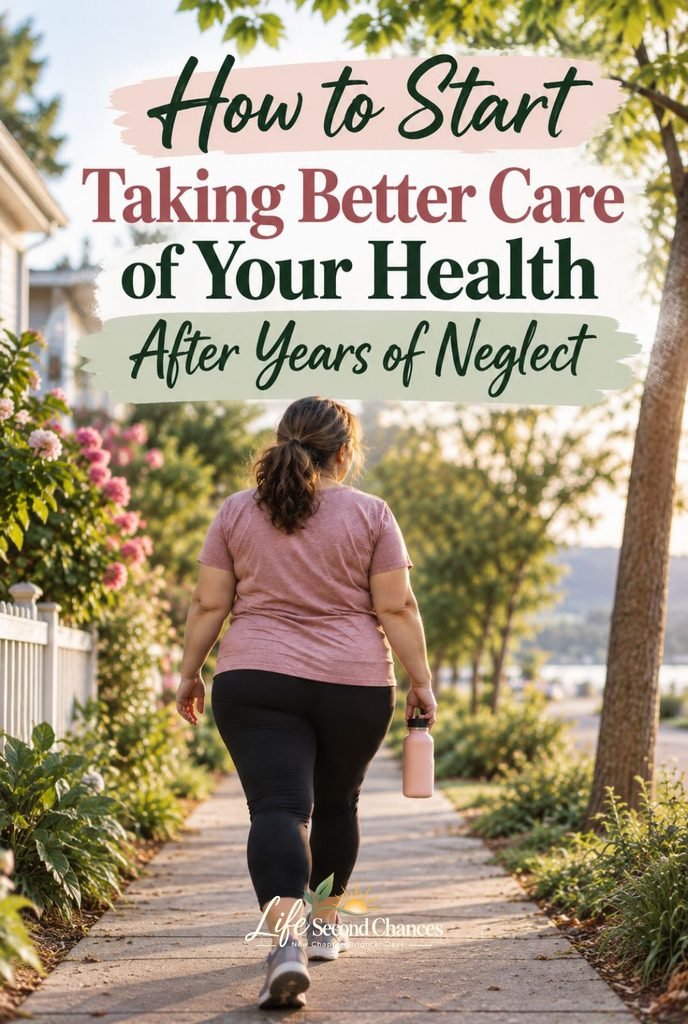
1. Start With a Health Checkup
If you haven’t had routine medical care for a long time, consider making an appointment with a qualified healthcare professional.
You don’t need to wait until something feels seriously wrong.
A healthcare professional can help you understand which preventive screenings, vaccinations, examinations, or tests may be appropriate based on factors such as your age, medical history, family history, medications, and individual risk factors.
Be honest about how long it has been.
You don’t need to arrive as the perfect patient.
You simply need to arrive.
And if you’ve been avoiding an appointment because you’re afraid of what you might learn, remember that avoiding information doesn’t necessarily protect you.
Knowing what’s happening gives you and your healthcare team more information to work with.
If you have new, severe, persistent, or concerning symptoms, don’t rely on lifestyle changes alone. Seek appropriate medical care.
2. Don’t Try to Become “Healthy” in One Week
After years of neglect, urgency can take over.
You decide:
No sugar.
No takeout.
Exercise every day.
Eight hours of sleep.
Ten thousand steps.
Meal preparation.
Vitamins.
Meditation.
Two liters of water.
Everything starts Monday.
By Thursday, you’re exhausted.
Your health doesn’t need a seven-day rescue mission.
It needs habits you can continue.
Choose a few manageable changes.
Maybe this week you:
Book your checkup.
Take a short walk three times.
Go to bed thirty minutes earlier.
Add vegetables to one meal each day.
That’s enough to begin.
3. Start Moving Again—Gently
You don’t have to begin with intense workouts.
If you’ve been inactive for a long time, simple movement counts.
Walking.
Stretching.
Gardening.
Dancing around the house.
Cycling.
Swimming.
Doing household tasks.
Taking stairs when appropriate.
Eventually, you may want a more structured routine that includes aerobic activity and strength work.
But the first goal can simply be:
Move more than you currently do.
If you have a health condition, injury, symptoms during activity, or concerns about what exercise is appropriate for you, talk with a healthcare professional before significantly changing your activity level.
Don’t compare your beginning with someone else’s established routine.
Ten minutes is better than the workout you keep postponing because sixty minutes feels impossible.
4. Pay Attention to What You Eat Without Trying to Eat Perfectly
Nutrition advice can become confusing quickly.
One person says carbohydrates are terrible.
Someone else says fat is the problem.
Another person has eliminated half the grocery store.
You don’t need to begin by creating an enormous list of forbidden foods.
Start with basic patterns.
Could you eat more vegetables and fruit?
Could you include more whole or minimally processed foods?
Could you choose sources of protein that work for your needs?
Could you include foods that provide fiber?
Could you reduce some foods or drinks that you consume in excess?
Could you cook at home a little more often?
Healthy eating doesn’t require every meal to be perfect.
Think about what you can add to improve your overall eating pattern, not only what you need to remove.
If you have specific medical conditions, allergies, nutritional deficiencies, digestive concerns, or other dietary needs, personalized advice from an appropriate healthcare professional or registered dietitian may be more useful than general nutrition tips.
5. Take Sleep Seriously
Sleep is often treated like the thing we do after everything else is finished.
But everything is rarely finished.
Try giving sleep an actual place in your routine.
You might begin by:
Keeping a more consistent bedtime and wake time.
Reducing late-night scrolling.
Creating a simple wind-down routine.
Making your bedroom comfortable for sleep.
Avoiding repeatedly sacrificing sleep for tasks that could wait until tomorrow.
If you regularly struggle to sleep, experience significant daytime sleepiness, or have concerns such as loud snoring or breathing interruptions during sleep, consider discussing them with a healthcare professional.
You don’t need to become a perfect sleeper.
You simply need to stop treating rest as optional.
6. Drink More Water If You Haven’t Been Drinking Enough
This doesn’t need to become another complicated health challenge.
Keep water somewhere visible.
Drink some with meals.
Carry a reusable bottle if that helps you remember.
Choose water more often when you’re thirsty.
Individual fluid needs vary, and some medical conditions may require specific guidance about fluid intake, so there isn’t one perfect amount that applies to everyone.
The goal is simply to pay more attention to hydration instead of realizing at the end of the day that you’ve barely had anything to drink.
7. Stop Ignoring Your Body’s Signals
Sometimes we become skilled at postponing things.
The headache.
The unusual fatigue.
The pain that keeps returning.
Changes in your body you haven’t understood.
Something that feels different.
You tell yourself:
I’m probably just tired.
It’ll go away.
I’ll deal with it later.
Not every symptom means something serious.
But persistent, worsening, unusual, or concerning symptoms deserve attention.
You don’t need to diagnose yourself online.
Make a note of what you’ve noticed and discuss concerns with an appropriate healthcare professional.
Taking your health seriously doesn’t mean becoming afraid of every sensation.
It means paying attention.
8. Make Preventive Care Part of Your Life
Healthcare isn’t only for emergencies.
Depending on your age, sex, health history, family history, risk factors, and where you live, preventive care may include things such as routine examinations, dental care, vision care, vaccinations, and recommended health screenings.
Recommendations differ between individuals and can change over time.
Rather than trying to create your own checklist from random posts online, ask a qualified healthcare professional which preventive care is appropriate for you.
Then put it on your calendar.
Health maintenance becomes easier when it becomes something you routinely do rather than something you remember only when there’s a problem.
9. Look at the Habits You Know Aren’t Helping You
Most of us already know at least one habit we’d benefit from changing.
Maybe it’s:
Smoking.
Drinking more alcohol than you intend.
Sitting for most of the day.
Staying awake far too late.
Living primarily on convenience foods.
Skipping meals and overeating later.
Using food to cope with every stressful emotion.
Never taking breaks.
You don’t have to solve everything today.
Choose one.
Learn what support is available.
Create a realistic plan.
Some habits, particularly those involving substances or dependence, can be difficult or unsafe to change without appropriate support. A healthcare professional can help you understand safer options and available treatment or cessation resources.
Asking for help is still taking responsibility for your health.
10. Don’t Make Weight Your Only Measure of Health
Weight may be relevant to health for some people, but it isn’t the only information that matters.
You can also pay attention to things like:
How consistently you’re moving.
Your strength.
Your energy.
Your sleep.
Your eating habits.
Your medical measurements and test results when appropriate.
Your ability to perform everyday activities.
How consistently you’re following recommended care.
If every health goal becomes entirely about the number on a scale, it can be easy to overlook meaningful improvements happening elsewhere.
Focus on building behaviors that support your health.
11. Take Care of Your Mental and Emotional Well-Being Too
Physical health and emotional well-being aren’t completely separate parts of life.
Stress can affect sleep.
Exhaustion can affect food choices.
Loneliness can influence habits.
Emotional struggles can make basic self-care much harder.
Pay attention to how you’re doing emotionally too.
Make room for rest.
Talk with people you trust.
Set boundaries where possible.
Spend time outside.
Do things that help you feel connected to your life.
And if you’re struggling with persistent emotional distress or having difficulty functioning in everyday life, consider seeking support from a qualified mental health professional.
Taking care of your mind is part of taking care of your health.
12. Make Your Environment Help You
Good intentions become easier when your surroundings support them.
Put walking shoes somewhere visible.
Keep convenient nutritious foods available.
Prepare ingredients ahead of time.
Set reminders for medication if needed and as directed.
Put medical appointments on your calendar immediately.
Charge your phone away from the bed if late-night scrolling keeps you awake.
Keep water nearby.
You don’t need to make healthy decisions harder than they already are.
13. Build a Routine That Can Survive a Busy Week
Anyone can follow an elaborate wellness routine during a quiet week.
The real question is:
What can you continue when life becomes busy again?
Maybe your ideal routine includes an hour at the gym.
But your minimum routine is a fifteen-minute walk.
Maybe you normally cook dinner.
But your backup plan is a simple meal you can prepare quickly.
Maybe you usually sleep eight hours.
But when things get busy, you still protect your bedtime instead of staying awake until 2 a.m.
Create a minimum version of your healthy habits.
That way, difficult weeks don’t automatically become weeks when everything disappears.
14. Don’t Spend a Fortune Trying to Become Healthy
Wellness marketing can make health look expensive.
Supplements.
Devices.
Programs.
Special foods.
Equipment.
Subscriptions.
You may find some products useful.
But you don’t need to buy an entirely new lifestyle before you can start taking care of yourself.
Walking can be free.
Sleep doesn’t require a subscription.
Many nutritious basic foods can fit ordinary grocery budgets.
Preventive healthcare may be available through local healthcare systems or insurance depending on where you live.
Start with what actually matters.
You can purchase extras later if they’re useful to you.
15. Be Careful With Health Advice Online
The internet contains excellent health information.
It also contains misinformation.
Be cautious with claims that promise:
Miracle cures.
Guaranteed results.
Extremely rapid transformations.
One food that supposedly causes every illness.
One supplement that supposedly fixes everything.
Advice telling you to stop prescribed treatment without consulting your healthcare professional.
Health decisions deserve better evidence than a confident person in a thirty-second video.
For important medical information, prioritize reputable health organizations and qualified healthcare professionals who can consider your individual circumstances.
16. Track Progress Without Becoming Obsessed
You might track:
Walks.
Sleep.
Appointments.
Meals cooked at home.
Strength workouts.
Medication adherence if prescribed.
A habit you’re trying to reduce.
How your energy feels.
But tracking should help you understand patterns.
It shouldn’t become another way to punish yourself.
You aren’t trying to earn a perfect health score.
You’re trying to notice whether your habits are gradually moving in a healthier direction.
17. Expect Your Motivation to Disappear Sometimes
At first, change can feel exciting.
You bought walking shoes.
You filled the refrigerator.
You booked the appointment.
You created the plan.
Two weeks later?
It isn’t exciting anymore.
That’s normal.
Health can’t depend entirely on inspiration.
Make habits easier.
Put them into routines.
Schedule them.
Create reminders.
Ask someone to join you.
Return after missed days.
Consistency doesn’t mean never stopping.
Sometimes consistency means becoming good at starting again.

You Don’t Have to Undo Years in a Few Months
This is important.
If you feel as though you’ve neglected your health for ten years, you may feel pressure to somehow compensate for those years immediately.
You can’t.
And you don’t need to.
Your job isn’t to punish yourself with extreme routines because you wish you had started earlier.
Your job is to take better care of yourself now.
Today’s walk matters.
Tonight’s sleep matters.
The appointment you finally book matters.
The meal you improve matters.
The habit you begin changing matters.
Small actions aren’t meaningless simply because you wish you’d started them years ago.
Don’t Let Embarrassment Keep You From Getting Help
Maybe you’re embarrassed that you haven’t seen a dentist in years.
Or haven’t had a checkup.
Or have gained weight.
Or stopped exercising.
Or ignored something you know you should have addressed.
Healthcare professionals see people at many different starting points.
You don’t need to improve yourself before you’re “allowed” to ask for help.
The appointment can be part of the improvement.
If you encounter a professional who makes you feel unnecessarily ashamed or dismissed, it may be reasonable, when possible, to seek another qualified provider with whom you can communicate more comfortably.
You deserve healthcare that allows you to ask questions honestly.
Your Health Doesn’t Have to Become Your Entire Personality
You can care about your health without thinking about it every minute.
The goal isn’t to spend your entire life optimizing yourself.
The goal is to build enough supportive habits that taking care of yourself becomes part of ordinary life.
Go for the walk.
Eat the vegetables.
Attend the appointment.
Get some sleep.
Then go live.
Health supports your life.
Your life doesn’t have to revolve entirely around health.
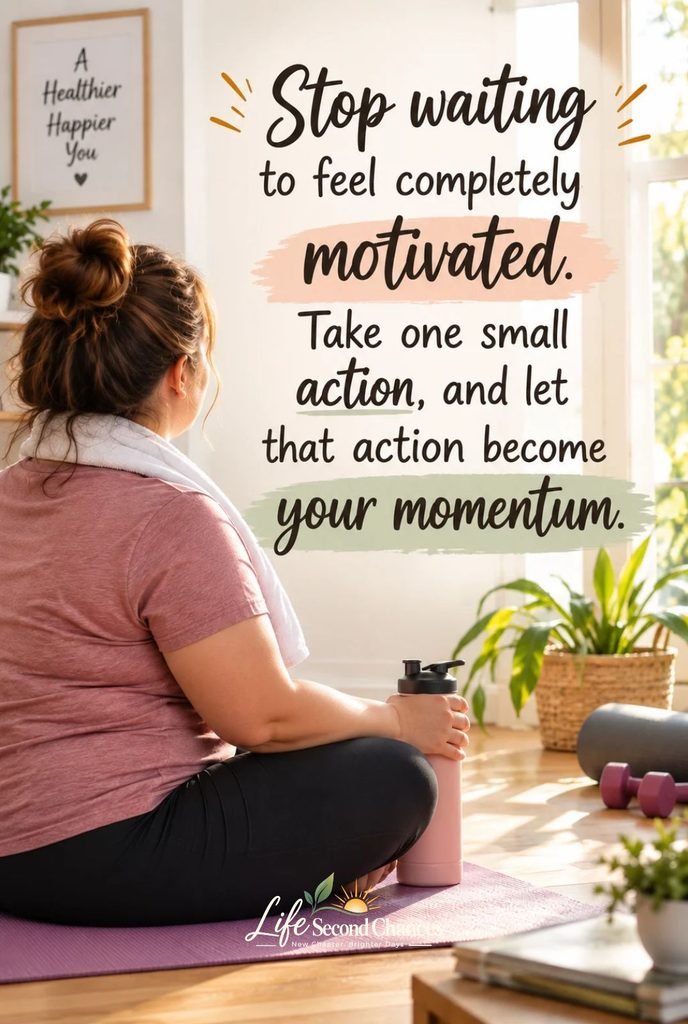
It Isn’t Too Late to Start Caring for Yourself
Maybe you wish you’d started five years ago.
Ten years ago.
Twenty years ago.
That feeling is understandable.
But imagine yourself several years from today.
There are two possibilities.
You can still be wishing you had started.
Or you can look backward and realize:
That was when I finally began.
You don’t need to become the healthiest person you know.
You don’t need to erase every unhealthy habit immediately.
You don’t need to transform your body in ninety days.
Start by taking your health seriously enough to make one good decision.
Then another.
Book the appointment you’ve postponed.
Take the walk.
Go to bed.
Make a better meal.
Ask the question.
Get the support you need.
And when tomorrow comes, choose something helpful again.
Because taking better care of your health isn’t about making up for all the years you didn’t.
It’s about deciding that the years still ahead of you deserve your care too.
“You can’t go back and take better care of the person you were ten years ago. But you can start taking care of the person who will live the years ahead.”